
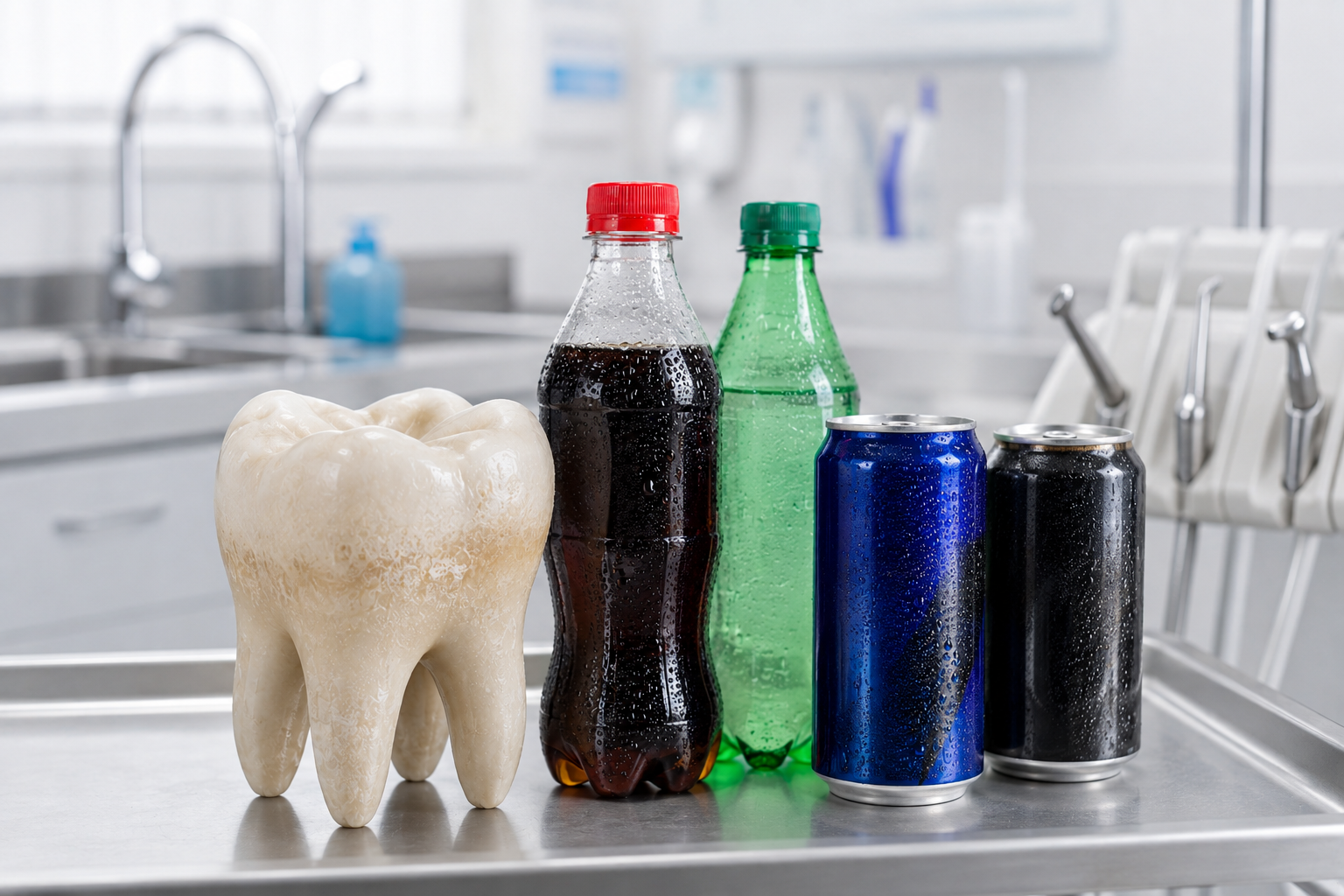
Energy drinks are a popular choice for people looking for a quick boost before work, school, exercise, or a long drive. They may help you feel more alert for a while, but many people don’t realize that frequent energy drink consumption can harm their teeth.
The combination of acidity, sugar, and frequent sipping can gradually weaken the protective outer layer of your teeth known as enamel. At Waterloo Dental Centre, patients are often encouraged to look beyond obvious sources of sugar and consider how everyday drinks may affect their long-term oral health.
Understanding how energy drinks interact with your teeth can help you make better choices without necessarily giving them up completely.
What Is Tooth Enamel?
Tooth enamel is the hard outer covering of each tooth. It protects the more sensitive layers underneath from daily wear, temperature changes, bacteria, and acids found in foods and drinks.
Although enamel is extremely strong, it is not indestructible. Unlike some tissues in the body, enamel cannot grow back once a significant amount has been worn away.
That makes prevention especially important.
When enamel begins to erode, teeth may gradually become more sensitive, look more yellow, or develop rough, worn edges. Advanced erosion may also make teeth more vulnerable to cracks and decay.
Why Are Energy Drinks Hard on Enamel?
One of the biggest concerns with energy drinks is their acidity.
Many energy drinks contain ingredients such as citric acid, carbonic acid, or other flavouring acids. When your teeth are repeatedly exposed to an acidic environment, the enamel surface temporarily softens.
If this happens frequently enough, small amounts of enamel can gradually wear away.
Sugar can add another problem. Many energy drinks contain significant amounts of added sugar. Oral bacteria use sugar as a food source and produce acids that contribute to tooth decay.
Even sugar-free energy drinks may still be acidic, so choosing a zero-sugar version does not completely remove the risk of enamel erosion.
Sipping Throughout the Day Can Increase the Risk
How you drink an energy drink can be just as important as what is inside it.
Drinking one quickly with a meal generally exposes your teeth to acid for a shorter period. Sipping the same drink slowly over several hours can repeatedly lower your mouth’s pH.
Your saliva normally helps neutralize acids and protect your teeth. However, if you keep taking another sip before your mouth has had time to recover, your enamel may remain exposed to acidic conditions for longer.
This is one reason dentists often recommend avoiding prolonged sipping of soft drinks, sports drinks, and energy drinks.
Signs Your Enamel May Be Wearing Down
Enamel erosion usually happens gradually, so the early signs may be easy to overlook.
You may notice increased sensitivity when consuming cold drinks, hot foods, or sweets. Your teeth may also start to look slightly more yellow as the darker layer beneath the enamel becomes more visible.
Other possible signs include:
- Rounded or worn-looking tooth edges
- Small chips or cracks
- Smooth or shiny areas on the teeth
- Rough surfaces
- Increased sensitivity
- Changes in the colour or shape of the teeth
These symptoms do not always mean energy drinks are responsible. Grinding, acid reflux, acidic foods, aggressive brushing, and other factors can also contribute to enamel wear.
A dental examination can help determine the cause.
How to Reduce Enamel Damage From Energy Drinks
If you occasionally enjoy an energy drink, a few simple habits can help reduce the amount of acid that stays in contact with your teeth.
Try drinking it with a meal rather than sipping it between meals for several hours. Using a straw may also reduce direct contact with the front teeth, although it does not eliminate acid exposure completely.
After finishing the drink, rinse your mouth with plain water. Water helps wash away acids and sugars while allowing your saliva to restore a healthier environment inside your mouth.
It is also important not to brush immediately after consuming something acidic. Because the enamel surface may be temporarily softened, brushing right away can contribute to additional wear.
Waiting about 30 to 60 minutes before brushing gives your saliva more time to neutralize the acids.
Choose Water More Often
One of the simplest ways to protect your teeth is to make water your main drink throughout the day.
Water does not expose your teeth to sugar or dietary acids, and it can help rinse away food particles throughout the day.
If you are using energy drinks mainly because you feel tired, consider whether sleep, hydration, meal timing, or another issue may be contributing to low energy.
Reducing how frequently you consume acidic drinks can make a meaningful difference to your enamel over the long term.
What Can a Dentist Do About Enamel Erosion?
Treatment depends on how much enamel has been affected.
For mild erosion, your dentist may recommend preventive measures such as fluoride toothpaste, professional fluoride treatment, dietary changes, or adjustments to your brushing routine.
If enamel loss becomes more noticeable, your dentist may use bonding or other restorative treatments to protect vulnerable areas or improve the appearance of damaged teeth.
At Waterloo Dental Centre, a dental examination can also help identify other possible contributors to enamel erosion, such as teeth grinding, dry mouth, diet, or acid reflux.
The earlier you notice enamel changes, the easier it may be to prevent further wear.
Regular Checkups Help Catch Changes Early
Because enamel erosion may not cause pain early on, regular dental checkups matter even when your teeth feel fine.
Your dentist can monitor changes on your tooth surfaces, check for cavities, assess sensitivity, and recommend preventive steps based on your habits.
Professional cleanings also support gum and tooth health by removing plaque and hardened deposits that regular brushing and flossing cannot always remove completely.
Good preventive care is usually much easier than dealing with advanced dental damage later.
Protect Your Teeth Without Overcomplicating Your Routine
You do not necessarily need to eliminate every acidic drink from your life. What matters most is how frequently your teeth are exposed and what you do afterward.
Limit prolonged sipping, drink water regularly, maintain good brushing and flossing habits, and give your mouth time to recover after acidic foods or beverages.
If you notice tooth sensitivity, changes in tooth colour, worn edges, or other concerning signs, a dental exam can help clarify what’s happening.
To arrange a dental checkup or discuss concerns about enamel erosion, call Waterloo Dental Centre at 519-883-0505.
DISCLAIMER: The advice offered is intended to be informational only and generic in nature. It is in no way offering a definitive diagnosis or specific treatment recommendations for your particular situation. Any advice offered is no substitute for proper evaluation and care by a qualified dentist.