
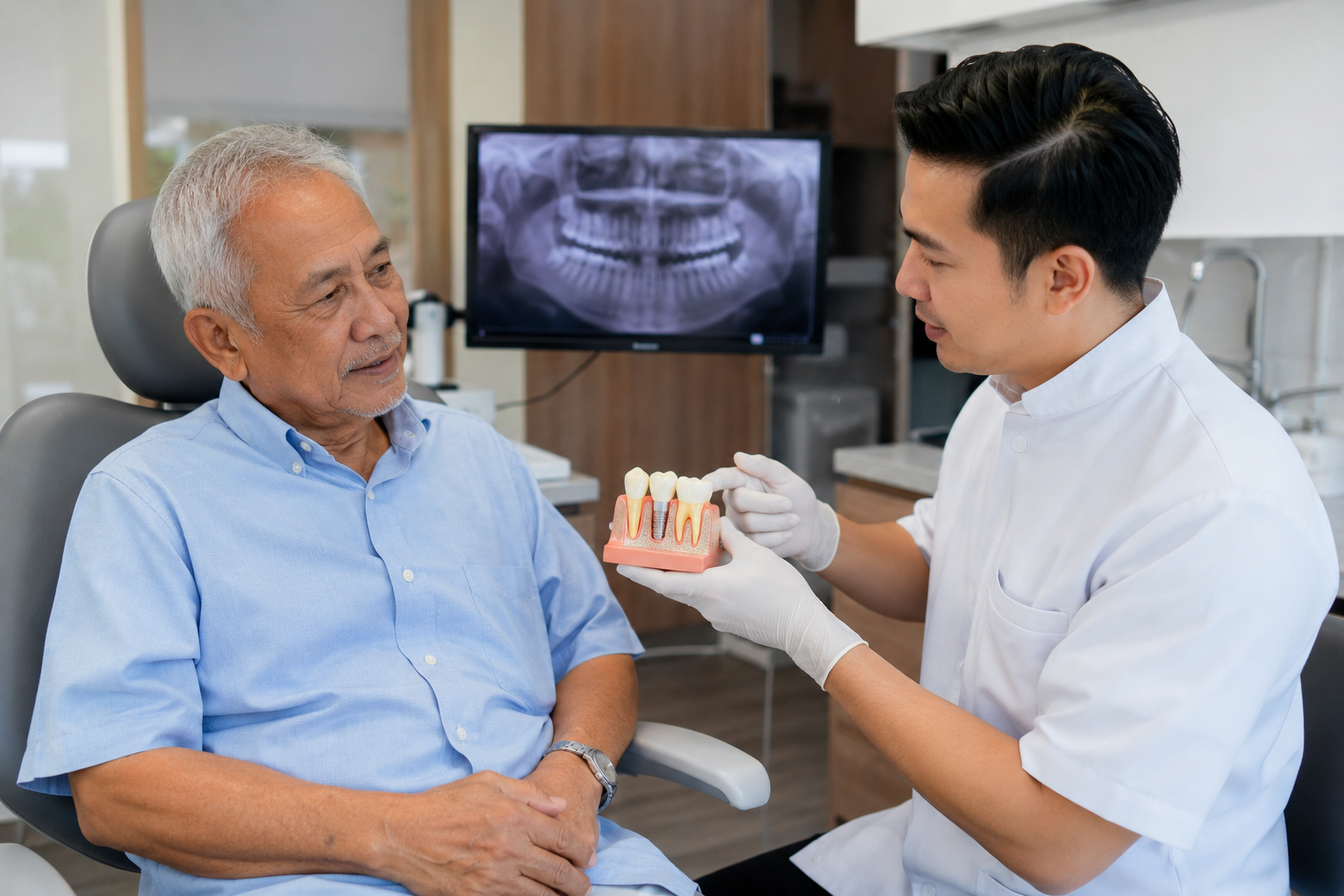
Dental implants can effectively replace missing teeth, but one question often comes up before treatment begins: Do I have enough bone for an implant? The answer depends on more than simply how much bone is present. Your dentist also considers the height, width, density, and overall condition of the jawbone where the implant will be placed.
If you are considering dental implants, an assessment at Waterloo Dental Centre can help determine whether your jaw has enough healthy bone to support an implant and whether any additional treatment may be recommended before placement.
Why Is Jawbone Important for Dental Implants?
A dental implant is a small titanium post placed into the jawbone to replace the root of a missing tooth. Once placed, the implant needs to become firmly integrated with the surrounding bone before it can support a crown, bridge, or other restoration.
For this reason, having enough healthy jawbone is an important part of successful implant treatment.
The bone must generally be sufficiently wide and deep for the dentist to position the implant securely without affecting nearby structures, such as nerves, neighbouring teeth, or the sinus cavity.
There is no single amount of bone that every patient must have. Implant size, location in the mouth, bone density, and your individual anatomy all influence what is considered sufficient.
How Much Bone Is Usually Required?
Dental implants come in different lengths and diameters. Many standard implants are several millimetres wide and approximately 8 to 12 millimetres long, although shorter or narrower implants may sometimes be used.
Ideally, the dentist wants enough bone around the implant on all sides to provide stability and support healing.
However, measurements alone cannot determine whether someone is a good candidate. A person may have adequate bone height but insufficient width. Another person may have enough bone volume but lower bone density.
This is why imaging and a complete dental examination are important before deciding on treatment.
How Does a Dentist Measure the Available Bone?
A regular dental X-ray can provide useful information, but implant planning may require three-dimensional imaging.
A cone beam computed tomography scan, often called a CBCT scan, can help a dentist evaluate:
- The height and width of the jawbone
- Bone shape and density
- The location of important nerves
- The position of the sinus cavities
- Nearby tooth roots
- Areas where bone has been lost
At Waterloo Dental Centre, your dentist can evaluate your oral health and available bone before discussing the implant options that may be appropriate for your situation.
Why Does Bone Loss Happen After Losing a Tooth?
Your jawbone is stimulated by the pressure created when you bite and chew. Natural tooth roots help transfer this pressure into the surrounding bone.
When a tooth is lost, the bone in that area no longer receives the same stimulation. Over time, the jawbone may gradually shrink.
Bone loss can also be associated with:
- Gum disease
- Long-standing missing teeth
- Dental infections
- Trauma to the mouth or jaw
- Poorly fitting dentures
- Certain health conditions
- Smoking
The longer a tooth has been missing, the greater the possibility that some bone loss has occurred. This does not automatically mean dental implants are no longer possible.
Can You Still Get Dental Implants With Bone Loss?
Many patients with some degree of bone loss can still be considered for implant treatment.
Depending on the location and severity of the bone loss, your dentist may recommend a bone graft before or during implant placement.
A bone graft adds material to an area that needs additional bone volume. Over time, the graft can help provide a stronger foundation for the future implant.
For implants in the upper back portion of the mouth, another procedure known as a sinus lift may sometimes be recommended when there is not enough bone between the mouth and the sinus cavity.
In selected situations, shorter or narrower implants may also be considered. The appropriate approach depends on your anatomy, oral health, and treatment goals.
Signs You May Have Experienced Jawbone Loss
Jawbone loss often develops without obvious symptoms. However, possible signs can include:
- Missing teeth that have not been replaced for several years
- Changes in facial shape around the mouth or jaw
- Dentures becoming loose over time
- Receding gums
- Shifting teeth
- Ongoing gum disease
- Difficulty chewing comfortably
Because bone loss may not be visible on a simple oral exam, dental imaging is often needed to understand what is happening beneath the gums.
How Can You Help Protect Your Jawbone?
Preventing tooth and bone loss is generally easier than rebuilding lost bone later.
Brush twice daily using fluoride toothpaste and clean between your teeth every day with floss or another interdental cleaning method. Healthy gums reduce the risk of periodontal disease, which can damage the structures that support your teeth.
Regular dental examinations and professional cleanings are also important. Your dentist can identify gum problems, cavities, infections, or damaged teeth before they become more serious.
If a tooth does need to be removed, ask your dentist about replacement options sooner rather than waiting several years. In some cases, discussing implants early can help preserve more of the existing jawbone.
Smoking can also interfere with oral healing and is associated with a greater risk of gum and implant problems, so reducing or stopping smoking can benefit both your general and dental health.
When Should You See a Dentist About Dental Implants?
Consider scheduling an implant consultation if you have one or more missing teeth, have been told you have bone loss, are struggling with a loose denture, or are wondering whether implants could work for you.
An assessment can help determine how much bone you currently have, whether you may need bone grafting, and what treatment options are available.
Dental implant planning is highly individual. The only reliable way to know whether you have enough bone is through a clinical examination and appropriate dental imaging.
If you are considering dental implants or would like to learn more about the condition of your jawbone, call 519-883-0505 to book an appointment with Waterloo Dental Centre.
DISCLAIMER: The advice offered is intended to be informational only and generic in nature. It is in no way offering a definitive diagnosis or specific treatment recommendations for your particular situation. Any advice offered is no substitute for proper evaluation and care by a qualified dentist.