Suturing Cuts and Lacerations in Waterloo
The inside of the mouth has a rich blood supply, so even a small cut can bleed a lot and look frightening. A fall off a bike, a sports collision, a slip of the toothbrush or biting down hard on your own cheek can all split the soft tissue. Many of these cuts heal on their own. Some don’t, and they need to be cleaned and closed with stitches. At Waterloo Dental Centre in uptown Waterloo, we assess and suture intraoral cuts and lacerations so they heal cleanly and with as little scarring as possible.
Here’s how to handle a mouth cut in the first few minutes, how to tell whether it needs stitches, and what suturing involves when you come in.
Where mouth cuts usually happen
Cuts inside the mouth tend to land in a few predictable places, and each heals a little differently.
- The inner lip. Often caused by a blow that drives the lip against the front teeth. These can be deep even when the outside of the lip looks fine.
- The tongue. Usually from biting it during a fall or a seizure. The tongue bleeds heavily but also heals fast.
- The gums. Sharp foods, a broken tooth or an injury can tear the gum away from the tooth.
- The cheek lining. Usually from biting, or from a jagged tooth or broken filling rubbing again and again.
- The frenum. That small fold of tissue under the upper lip or tongue can tear in falls, especially in young children.
First aid: the first ten minutes
Stay calm and take a proper look. Blood mixes with saliva and makes the injury seem much worse than it is.
- Rinse gently with cool water so you can see where the bleeding is coming from.
- Fold a piece of clean gauze or a damp cloth and press it firmly against the cut. For a lip, you can pinch the lip between your fingers with the gauze inside.
- Hold steady pressure for a full 10 to 15 minutes. Don’t keep lifting it to check, as that restarts the bleeding.
- Put a cold pack or a bag of frozen peas wrapped in a towel on the outside of the face to reduce swelling.
- Check the teeth nearby. Look for chips, loose teeth or missing pieces, and keep any fragments you find.
A popsicle works well for small children with a cut lip or tongue. It soothes, chills the area and keeps them distracted.
Does this cut need stitches?
Small, shallow cuts that stop bleeding with pressure and have edges that sit together usually heal by themselves within a week or so. Call us to be seen if any of these apply:
- The cut is longer than about a centimetre or gapes open when you relax your mouth
- Bleeding keeps starting again after 15 minutes of firm pressure
- The cut goes through the edge of the tongue or through the border of the lip
- Something may be stuck in the wound, like gravel, a piece of tooth or glass
- A flap of tissue is hanging loose
- The injury came with a broken, loose or knocked out tooth
Head to a hospital first if…
The cut goes all the way through the lip or cheek to the skin outside, bleeding is heavy and won’t slow down at all, or the person hit their head and seems drowsy, confused or is vomiting. Animal bites and puncture wounds from dirty objects also belong in an emergency department, since they may need a tetanus shot or antibiotics. Once the bigger issues are handled, we can look after the teeth and gums.
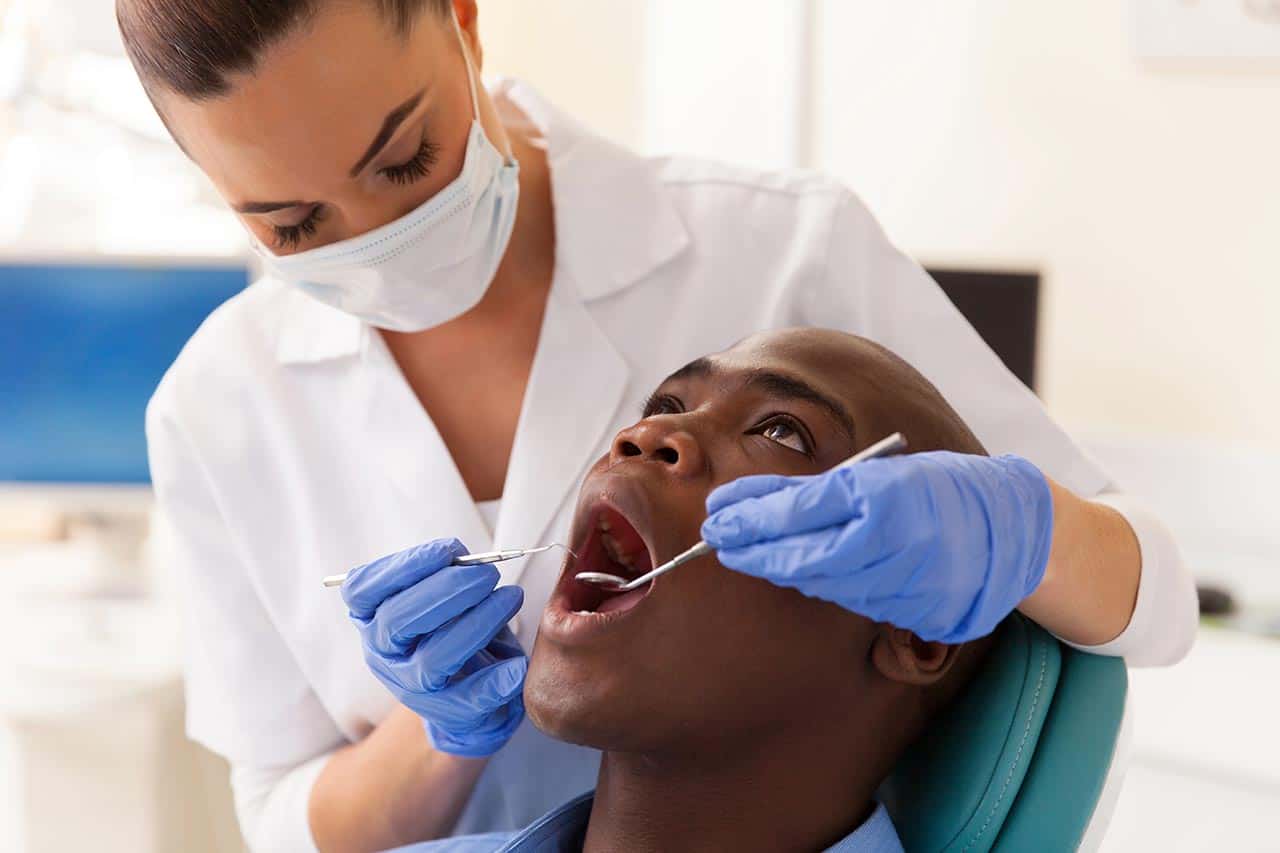
How we suture a cut in the mouth
When you arrive at our Waterloo office, we first look at the whole area, not just the cut. A laceration often comes with a dental injury, and we’d rather find a cracked tooth now than a week later. If teeth were hit, we may take an X-ray.
Numbing and cleaning
We apply a numbing gel and then give a local anaesthetic so you won’t feel the stitching. Next, the wound is gently rinsed to flush out debris and bacteria. If there’s anything stuck inside, like a tooth fragment, it’s removed at this stage. Cleaning properly is the main thing that keeps a mouth cut from becoming infected.
Closing the wound
We bring the edges together with fine sutures. Inside the mouth, we usually use dissolving stitches, which break down on their own in about one to two weeks. That means no extra appointment just to have them taken out. For a cut that crosses the red border of the lip, careful alignment matters a great deal because even a slight mismatch can show once it heals, so we take our time there.
How long it takes
Most intraoral suturing takes less than half an hour, including numbing. More complex lacerations, or ones paired with tooth repairs, take longer.
If a tooth was injured too
A lot of mouth cuts come from the same blow that chips or loosens a tooth. In that case we usually close the soft tissue first, then deal with the tooth, either on the same visit or at a follow up once the swelling has gone down. A loose tooth may need a light splint for a short time. A chipped one can often be smoothed or bonded. If a tooth took a hard knock, we’ll often ask you to come back in a few weeks so we can check that the nerve inside is still healthy, since that sometimes changes after an injury.
Healing at home
The mouth heals faster than skin does, and most sutured cuts feel much better within a few days. To help it along:
- Stick to soft, cool foods for the first day or two, such as yogurt, eggs, pasta and smoothies
- Avoid spicy, salty, crunchy and acidic foods until the area is comfortable
- Don’t use a straw for the first day, and try not to play with the stitches using your tongue
- After 24 hours, rinse gently with warm salt water a few times a day, especially after eating
- Keep brushing your other teeth, and brush near the cut very gently
- Don’t smoke or vape while it heals. Both slow healing and raise the risk of infection
Some swelling and bruising is normal for two or three days. The cut may also look white or yellowish while healing. That’s just how healing tissue looks in a moist mouth and isn’t usually a sign of infection.
Call us back if
Swelling gets worse after the third day, the area becomes hot and throbbing, you notice pus or a bad smell, a fever develops, or the stitches come out early and the cut opens up again.
Common questions about mouth stitches
Will it leave a scar?
Cuts inside the mouth rarely leave a visible scar. Cuts across the lip border can, which is why careful closing matters for those.
Can a dentist really stitch a cut?
Yes. Dentists are trained in suturing soft tissue in the mouth, since it’s part of many routine procedures like extractions and gum treatment.
My child’s frenum tore. Is that serious?
It looks dramatic and bleeds a lot, but it often heals well without stitches. We still like to see it so we can check the teeth and confirm it’s healing properly.
Cut inside your mouth? Call our Waterloo office
If a cut in your mouth won’t stop bleeding or looks like it might need stitches, call Waterloo Dental Centre at 519-883-0505. We’ll ask a few quick questions and tell you how soon to come in. You’ll find us at 258 King St N, Unit 7, in uptown Waterloo.
Related treatments
- Emergency dental exams
- Foreign object removal
- Treatment complications
- Broken tooth and denture repair
Questions or ready to book? Contact our Waterloo office or call 519-883-0505.