
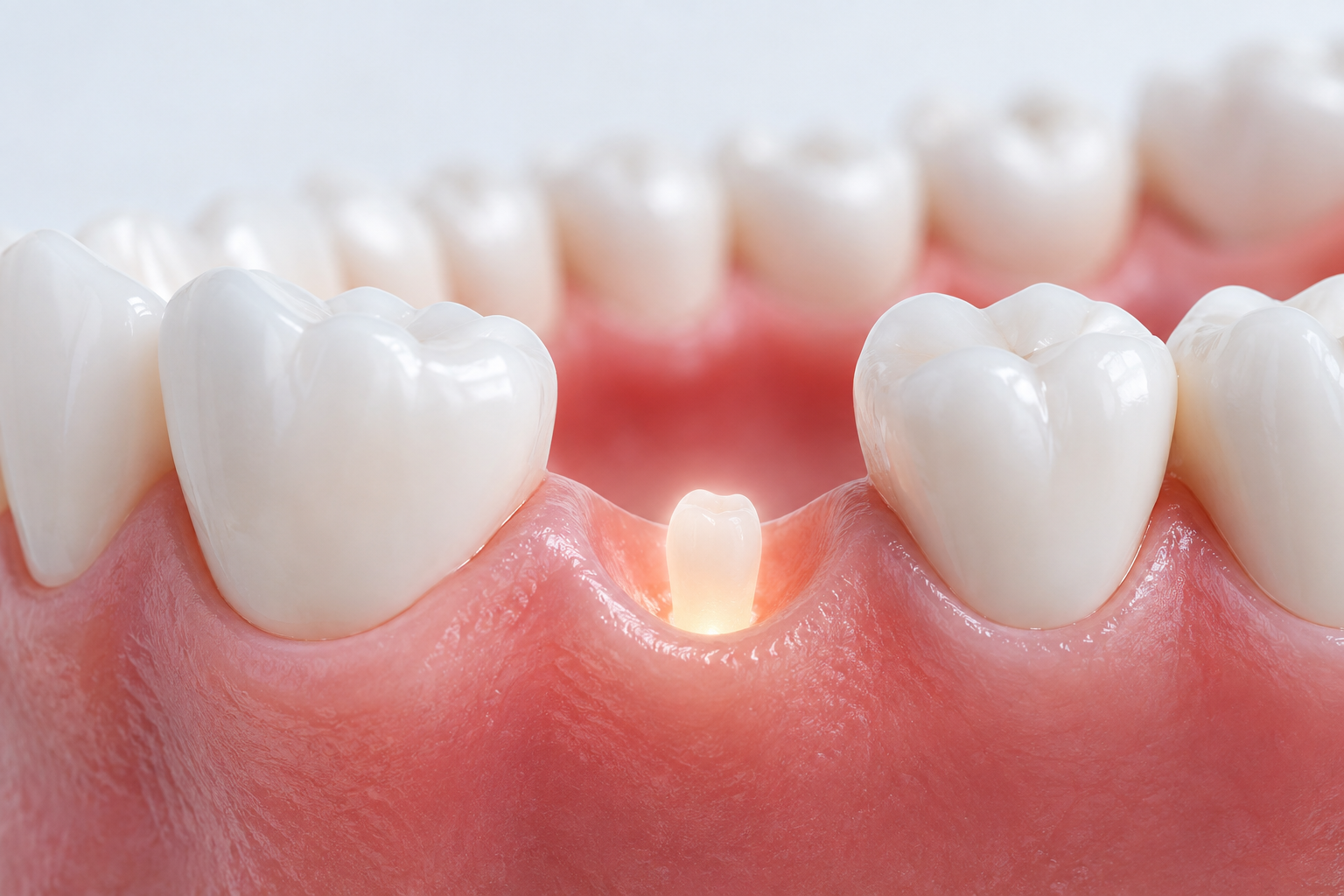
Losing a permanent tooth can change the way you eat, speak, and smile. Unlike a cut on the skin or a broken bone, a missing adult tooth does not normally grow back. That raises an interesting question: could advances in regenerative dentistry eventually change this?
Researchers are exploring ways to repair damaged dental tissues and, one day, potentially encourage the body to grow replacement teeth. While the science is promising, naturally regrowing an entire adult tooth is not yet an everyday dental treatment. At Waterloo Dental Centre, patients can still benefit from established treatments designed to preserve natural teeth and replace teeth that cannot be saved.
What Is Regenerative Dentistry?
Regenerative dentistry focuses on helping damaged dental tissues repair or regenerate using the body’s own biological processes.
Traditional dentistry often repairs damage with materials such as fillings, crowns, bridges, and dental implants. Regenerative approaches take a different direction. Researchers are studying whether cells, proteins, scaffolds, and other biological signals can encourage the body to rebuild damaged tissues.
Some regenerative techniques are already being investigated or used in specific areas of dentistry, particularly treatments involving the dental pulp, the soft tissue inside a tooth that contains nerves and blood vessels.
Research published in 2026 continues to examine regenerative endodontic procedures and the potential of dental pulp stem cells to restore living dental tissues. However, much of this work remains experimental or limited to carefully selected situations.
Can Adult Teeth Actually Grow Back?
For most adults today, the answer is no.
Humans normally develop two sets of teeth: primary or “baby” teeth and permanent teeth. Once a permanent tooth is completely lost, the body generally does not produce another one.
Scientists are trying to understand why tooth development stops and whether the biological processes responsible for forming teeth during childhood could somehow be reactivated.
This research includes stem cells, tissue engineering, growth factors, and methods of stimulating cells that already exist around the teeth and gums. Early studies are encouraging, but successfully creating a complete new tooth with the correct roots, nerves, blood supply, shape, and position is far more complicated than simply producing new dental tissue.
For that reason, claims that people can currently take a medication or undergo a routine procedure to naturally regrow a missing adult tooth should be treated with caution.
What Parts of a Tooth Can Regenerate?
Although growing an entirely new tooth remains a future possibility, certain dental tissues have more regenerative potential than others.
Dental pulp: Researchers have made progress studying ways to restore or revitalize damaged pulp tissue inside teeth. Regenerative endodontic procedures are particularly relevant for some younger patients whose permanent teeth are still developing.
Dentine: the hard layer beneath enamel. Teeth can produce limited amounts of new dentine in response to irritation or injury, although this is not the same as rebuilding a severely damaged tooth.
Gum and supporting tissues: Periodontal treatments can sometimes encourage regeneration of bone and tissues that support the teeth in carefully selected cases.
Enamel: Enamel is different. Once significant enamel has been lost, the body cannot simply grow it back. This makes protecting enamel from decay, erosion, and excessive wear especially important.
What Happens If You Lose a Permanent Tooth Today?
You do not need to wait for future technology if you are currently dealing with a missing tooth.
Depending on your oral health, bone levels, neighbouring teeth, budget, and personal preferences, treatment options may include:
- A dental implant with a replacement crown
- A fixed dental bridge
- A removable partial denture
- Monitoring the space in selected situations
A dentist can examine the area and explain which choices make the most sense for you.
If a tooth is badly damaged but still present, saving it may also be possible. Treatments such as fillings, crowns, root canal therapy, or periodontal care can sometimes preserve a natural tooth that might otherwise be lost.
At Waterloo Dental Centre, an examination can help determine whether a damaged tooth can be restored or whether replacement options should be considered.
Signs You Should Have a Tooth Checked
Regenerative dentistry may sound exciting, but preventing serious damage is much easier than replacing a lost tooth.
Book a dental examination if you notice:
- Ongoing toothache or sensitivity
- Pain when chewing
- Swelling around a tooth or the gums
- Bleeding gums that happen regularly
- A cracked, loose, or broken tooth
- Darkening or discolouration of a tooth
- Receding gums
- Persistent bad breath
- A bump or pimple on the gums
Dental problems do not always cause severe pain at first. Cavities and gum disease can progress quietly, which is one reason regular dental examinations are important.
Protecting the Teeth You Have
Even if scientists eventually develop reliable ways to regrow teeth, keeping your natural teeth healthy will remain the simplest option.
Brush twice daily with fluoride toothpaste and clean between your teeth every day using floss or another interdental cleaner. Limit frequent exposure to sugary and acidic foods and drinks, especially between meals.
If you play contact sports, consider wearing a properly fitted mouthguard. Avoid using your teeth to open packages or bite hard objects, since this can cause cracks and fractures.
Most importantly, maintain regular dental checkups and professional cleanings according to the schedule recommended for your oral health. Routine visits give your dental team an opportunity to find small problems before they become more difficult to manage.
The Future Is Exciting, but Prevention Matters Today
Regenerative dentistry could eventually change how dentists treat damaged and missing teeth. Researchers are already investigating stem cells, tissue engineering, pulp regeneration, and other techniques that were unimaginable only a few decades ago. Recent research shows that this is an active area of dentistry, although complete biological tooth replacement is not yet a routine clinical option.
For now, the best approach is to protect your natural teeth, address dental problems early, and discuss proven treatment options with your dentist when a tooth becomes damaged or missing.
If you have a tooth that is painful, damaged, loose, or missing, or you simply want to stay ahead of future dental problems, book an examination. To schedule an appointment or learn more about your treatment options, contact the office at 519-883-0505 and speak with Waterloo Dental Centre.
DISCLAIMER: The advice offered is intended to be informational only and generic in nature. It is in no way offering a definitive diagnosis or specific treatment recommendations for your particular situation. Any advice offered is no substitute for proper evaluation and care by a qualified dentist.