
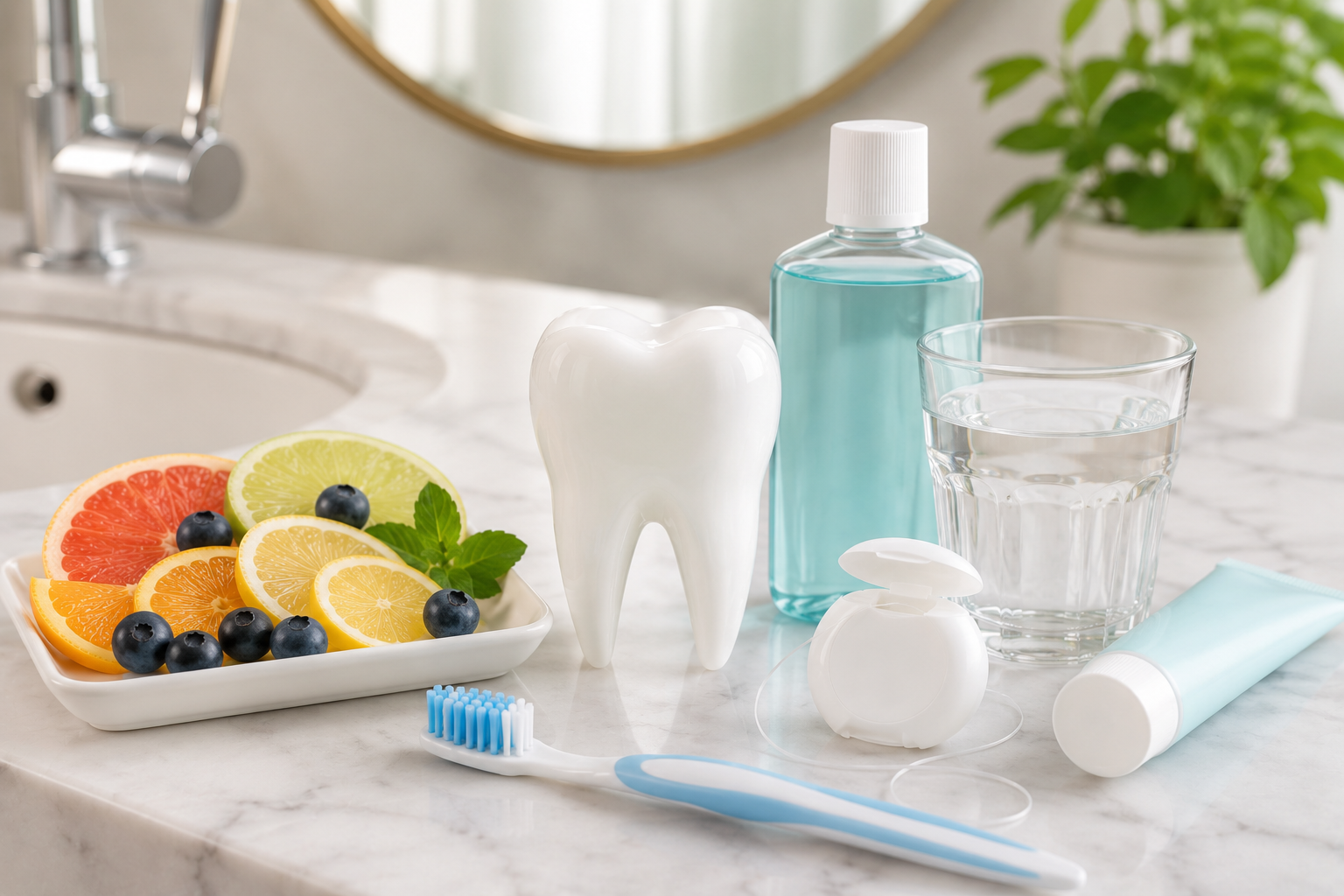
Fruit is an important part of a balanced diet, but some fruits can be surprisingly hard on your teeth. Citrus fruits, berries, and certain tropical fruits contain natural acids that can gradually soften tooth enamel, especially when they are eaten frequently throughout the day. At Waterloo Dental Centre, patients sometimes ask whether they need to avoid acidic fruits altogether. Fortunately, you usually do not. Understanding how acidic foods affect your teeth and making a few simple changes can help you enjoy fruit while protecting your smile.
What Is Tooth Enamel?
Tooth enamel is the hard outer surface that protects each tooth. It shields against everyday chewing, temperature changes, bacteria, and acids.
Although enamel is extremely strong, it is not indestructible. Repeated exposure to acidic foods and drinks can temporarily soften its surface. Over time, frequent acid exposure may contribute to dental erosion, meaning some enamel gradually wears away.
Unlike some other tissues in the body, enamel cannot grow back once a significant amount has been lost. That is why prevention is so important.
Which Fruits Are the Most Acidic?
Fruit acidity varies by type, ripeness, and preparation. Some of the fruits that tend to be more acidic include:
- Lemons
- Limes
- Grapefruit
- Oranges
- Pineapple
- Cranberries
- Kiwi
- Green apples
- Certain berries
Lemons and limes are particularly acidic. People often add them to water, tea, sauces, and other foods, which can increase how often your teeth are exposed to acid during the day.
This does not mean these fruits are unhealthy. Many provide vitamin C, fibre, antioxidants, and other nutrients. The main concern is how often your teeth come into contact with their acids.
How Acidic Fruits Affect Tooth Enamel
When you eat acidic fruit, the pH level inside your mouth temporarily drops. This acidic environment can soften the mineral surface of your enamel.
Your saliva naturally helps neutralize acids and restore minerals to the tooth surface. Problems are more likely to occur when acid exposure happens repeatedly without giving your mouth enough time to recover.
For example, eating an orange with lunch is generally less concerning than slowly sipping lemon water throughout the entire afternoon.
Frequent snacking on acidic fruits can create repeated periods of enamel softening. Over time, this may increase your risk of erosion and tooth sensitivity.
Signs Your Enamel May Be Wearing Down
Enamel erosion can develop gradually, so you may not notice it immediately. Possible signs include:
Increased tooth sensitivity
You may feel discomfort when eating or drinking something cold, hot, sweet, or acidic.
Teeth looking more yellow
Enamel is naturally somewhat translucent. As it becomes thinner, the yellowish dentin underneath may become more visible.
Smooth or shiny areas
Some teeth may develop unusually smooth, rounded, or shiny surfaces.
Small chips or rough edges
Thinner enamel may be more vulnerable to small chips or changes around the edges of the teeth.
If you notice these symptoms, a dental examination can help determine whether enamel erosion, tooth decay, gum recession, or another issue is responsible.
How to Enjoy Acidic Fruit Without Damaging Your Teeth
You do not necessarily need to remove acidic fruits from your diet. Instead, focus on reducing how long and how often your teeth are exposed to acid.
Eat fruit as part of a meal
Eating acidic fruit at breakfast, lunch, or dinner is usually better than snacking on it throughout the day. Saliva production also increases during meals, helping neutralize acids.
Rinse your mouth with water
After eating citrus fruit or another acidic food, rinse your mouth with plain water. This helps wash away some of the remaining acids and sugars.
Do not brush immediately
It may seem logical to brush your teeth right after eating something acidic, but brushing while enamel is temporarily softened can increase surface wear.
Wait approximately 30 to 60 minutes before brushing your teeth.
Use a soft-bristled toothbrush
A soft toothbrush and gentle brushing technique can clean your teeth effectively without putting unnecessary pressure on enamel or gums.
Choose fluoridated toothpaste
Fluoride helps strengthen enamel and makes teeth more resistant to acid attacks.
Avoid sucking on lemons or limes
Holding highly acidic fruit directly against your teeth for extended periods can increase enamel exposure.
Be careful with fruit juices
Juice may expose your teeth to both acid and natural sugars without providing the same fibre as whole fruit. Drinking juice frequently or sipping it slowly can be particularly hard on enamel.
What About Lemon Water?
Lemon water is popular, but drinking it repeatedly throughout the day can expose your teeth to acid for long periods.
If you enjoy lemon water, consider drinking it with a meal rather than sipping it continuously. Drinking through a straw may also help reduce direct contact with your front teeth, although it does not completely eliminate acid exposure.
Follow it with plain water and avoid brushing immediately afterwards.
Can Damaged Enamel Be Repaired?
Very early enamel weakening may sometimes be strengthened through remineralization with fluoride, saliva, and appropriate dental care.
However, once enamel has physically worn away, it cannot naturally regenerate.
Depending on the severity of erosion, treatment may include fluoride products, desensitizing toothpaste, dental bonding, veneers, or crowns. Treatment recommendations depend on how much enamel has been lost and whether the teeth are painful, weakened, or affecting your bite.
A dentist at Waterloo Dental Centre can examine areas of concern and recommend ways to protect the remaining enamel before the problem progresses.
Regular Dental Checkups Can Catch Enamel Problems Early
Dental erosion is often easier to manage when it is identified early. During a routine checkup, your dentist can look for changes in enamel thickness, sensitivity, cracks, cavities, and signs of excessive acid exposure.
Regular professional cleanings are also an opportunity to discuss your diet, brushing habits, fluoride use, and any changes you have noticed in your teeth.
Preventive care is especially important for children and teenagers, people who regularly consume acidic drinks, and anyone who already experiences tooth sensitivity.
Protect Your Teeth Without Giving Up Healthy Foods
Acidic fruits can still be part of a healthy diet. The key is to limit prolonged acid exposure, rinse with water after eating, wait before brushing, use fluoride toothpaste, and keep up with regular dental visits.
If your teeth have become sensitive, look thinner than before, or you are concerned about enamel erosion, professional advice can help you understand what is happening and what steps to take next.
To arrange a dental examination or discuss ways to protect your tooth enamel, call 519-883-0505 and book an appointment with Waterloo Dental Centre.
DISCLAIMER: The advice offered is intended to be informational only and generic in nature. It is in no way offering a definitive diagnosis or specific treatment recommendations for your particular situation. Any advice offered is no substitute for proper evaluation and care by a qualified dentist.